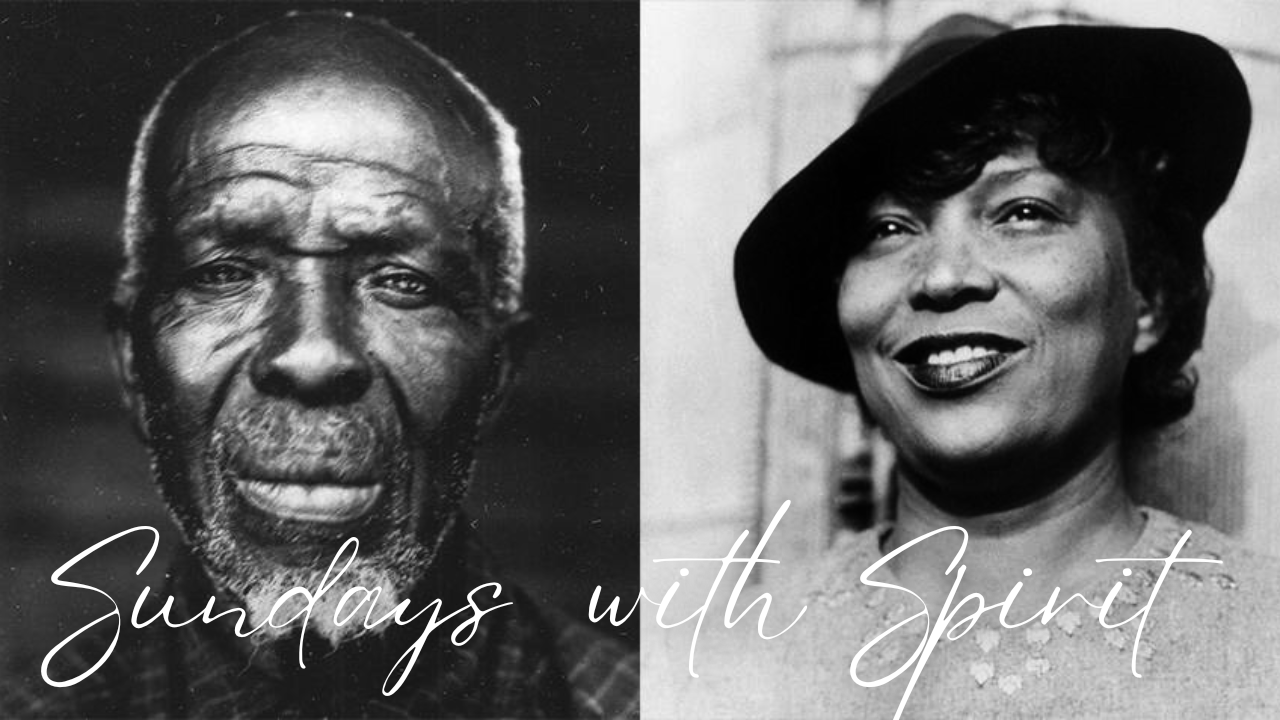
You know how some stories leave you staring at a wall for extended periods of time? Zora Neale Hurston’s Barracoon left me in the deepest period of reflection and thought for one particular reason: Oluale Kossola’s reverence to God existing in the same space as his existential longing of home.
Disclaimer: Hurston’s book contains accounts on the division between enslaved Black Americans and Africans that will be mentioned here. My intention is to handle this objectively and with care to provoke thought and open conversation.

In the Afterword, it is written:
Where conventional slave narratives speak of conversions to Christianity, Kossola’s narrative does also, but it does so while simultaneously epressing the spiritual traditions and customs of his homeland. He hadn’t built up his hope on a future heavenly glory, but rather on a return to his people, a vision that speaks to the centrality of ancestral reverence. His narrative does not recount a journey forward into the American Dream. It is a kind of slave narrative in reverse, journeying backward…and even further back, to a period of tranquility, a time of freedom, and a sense of belonging.
– Barracoon by Zora Neale Hurston
Moving forward, the author notes this to be what separates the way God is perceived to people who have never known their Motherland from those who remember it vividly, even when Kossola spends only the first 19 of his ~94 years on “Afficky soil.” According to the text, Africans faced the same ridicule from Black and white Americans alike. To me, this behavior is a direct reflection of the belief systems Black Americans were conditioned to.
We must also keep in mind how this grossly misconstrued sacred text was used to support and uphold both spiritual and political systems in America for over 400 years to present day. 400+ years of brainwashing meant to sever your connection the land and Ancestors native to both America and Africa. To put this in even deeper context, we’re only about 161 years removed from chattel slavery, but its systems are still in place, just rebranded. So I feel these conversations are still relevant.
Some still remember, because the Spirit of Hoodoo is alive and well. So when I think of Kossola’s dichotomy between the God of that Bible and his longing for home, I feel those connected to Hoodoo can empathize here.
“In Afficky we always know dere was a God…but po’ Affickans we cain readee de Bible, so we doan know God got a Son. We ain’ ignant—we jes doan know.”
– Oluale Kossola (Cudjo Lewis), Barracoon
From this account, I feel enslaved Africans and enslaved Black Americans recognized this shared connection to God and home. Remnants of indigenous spiritual reverence were infused into Abrahamic religions for discretion, I think we can agree on that. But also when we look to the excerpt above, I share the author’s sentiments on Black Americans and Africans shared desires for faith, hope, and belonging.
I don’t see a difference between this ‘Biblical heaven’ according to the enslaved Black Americans, and ‘home’ for Black Africans like Kossola. There’s this desire to return to belonging that connects the two for me, and what I feel is the lesson Spirit is showing me through this passage.
In other words, are we all saying the same thing? What if Kossola’s conversion to Christianity was done for the sake of community while on foreign land, in hopes that it would make him feel at home?
This is another layer to Hoodoo that I feel was always intended to do for our people. It was about more than reverence: it was to feel like we belong to something.
Imagine being transfixed between the known and unknown, and how unsettling that can be to our Spirit. How isolating and lonely it can feel to be amongst the seemingly foreign. Maybe none of this matters, but there’s a part of me that feels that it does. Especially for current times where so many are deconstructing religion and all that comes with it.
My views around this aren’t fixed, so this piece is more so around landing this train of thought rather than presenting a complete package here, so I invite other Hoodoos to join in on the conversation. Would love to hear your thoughts on this.
With love,


Leave a Reply