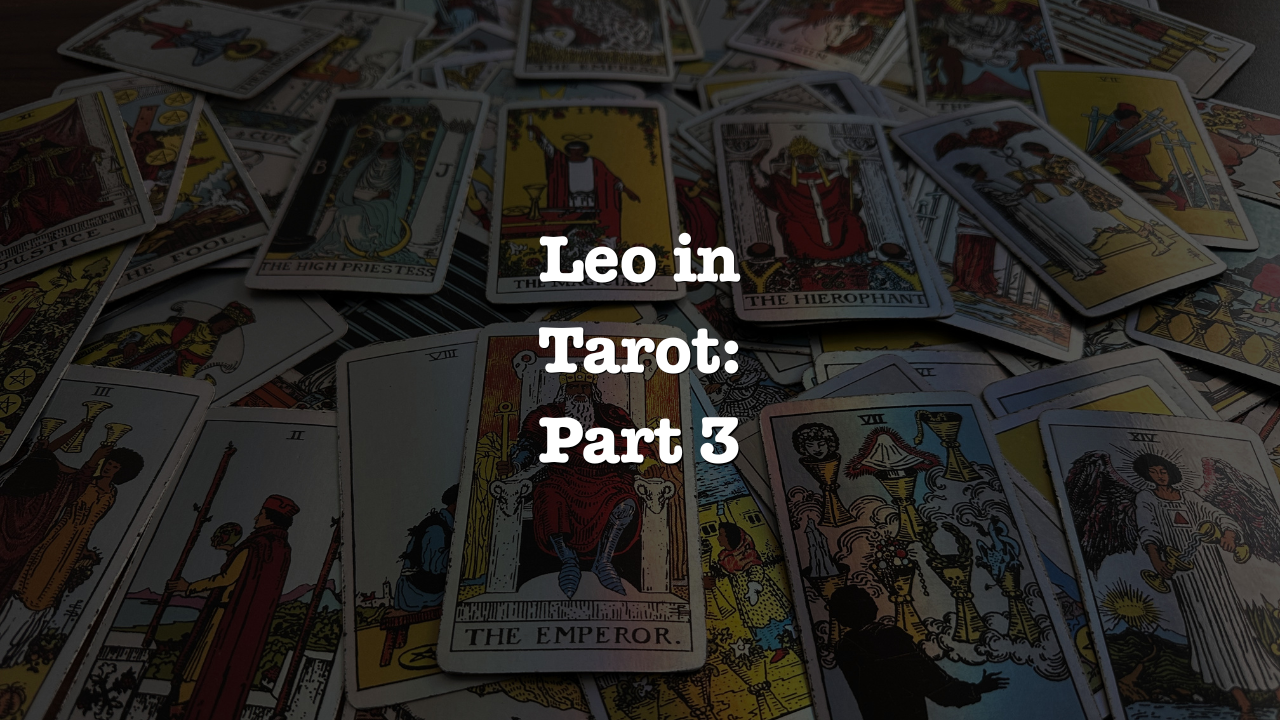
Tarot has such a detailed, intricate history that incorporates principles many ancient esoteric and historical systems. There are influences from Kabbalism, Kemeticism, Medieval Mysticism, Alchemy and more. For this post, we will be discussing the origins of tarot cards as well as a breakdown of the major and minor arcanas.

The origins of playing cards can be dated back to the 9th century in China, the place credited for the invention of paper. These cards contained lots of symbolic imagery and meaning, similar to what we see with the tarot cards we use present day. It is believed that the practice of utilizing cards for divination purposes began here, hundreds of years before the first tarot deck was ever made. Playing cards eventually made their way into the populations of India, Persia, Egypt, then Italy up through the late 14th century.
The exact origins of tarot cards have been debated over the years; however, one of the first versions that were foundational to the way we use tarot modern day can be attributed to the Trifoni and Tarocchi playing cards published in Italy around 1440.

It is in the 17th and 18th centuries where we begin to see forms of tarot being utilized for divination and fortune telling. The Rider-Waite-Smith (RWS) tarot deck (the version I teach from) was first published by the Rider Company in 1909, commissioned by Authur Edward Waite (British scholar specializing in occultism and esotericism) and illustrated by Pamela Colman Smith (British artist, illustrator, writer, and occultist). The Marseille Tarot deck and Thoth Tarot deck are other popular versions that are also in use present day.

Now, with that brief history, let’s look into what tarot’s all about and begin our journey in understanding the cards.
Foundation of Tarot
First, tarot consists of 78 keys (cards) that detail significant lessons one experiences along the Fool’s journey. The Fool (a term of innocence, not insult) is the main character of this story, which is also you! Each card contains significant imagery that play into the overall meaning of each card, and I will do all I can to point out each and every one of them over the following posts.
These keys are broken down into two sets: 22 Major Arcana cards and 56 Minor Arcana cards. Major Arcana translates to, “big secrets”. When we refer to major arcana, this is all about outside influences that play a ‘major’ part in our human experience. These are the ways and laws of the universe that we as human beings have little to no direct control over. Like the weather, for instance. The Major Arcana is like our almanac that gives us the tea on larger-than-life circumstances that shed light on whatever situations are being read into at that time.

The Minor Arcana is what we do to ‘weather’ the larger scale events we observe through the Major Arcana. It’s like saying, “There’s a snow storm (Major Arcana) on the way that I can’t control, but I can control how I move through it (Minor Arcana). These “little secrets” are like nudges from Spirit that tell us things we can do to have the best outcome in the face of those situations. The Minor Arcana can also show you how you’re currently handling those big life circumstances and what you can do to enforce or modify the outcome.
Wands, Cups, Swords, and Pentacles are the four suits that make up the Minor Arcana (we will discuss this in the upcoming posts in greater detail). Each suit contains an Ace, cards 1-10, and 4 court cards (Page, Knight, Queen, King).

The progression of the tarot cards through the Major and Minor Arcana are not stand alone, it is a story where the principles of each card build on one another. For example, to grasp the fullness of Key 7 (The Chariot), it is helpful to understand how we got there. The prior cards all contain principles that play a role in how we experience and really master Chariot energy. For the Minor Arcana, the Ace shows us the potential of the suit while the remaining cards show us each facet of the suit in question.
Tarot is a journey! I’ve been learning tarot and doing readings since 2017 and each reading, book, and research I’ve done has all taught me something new each time. Or a student will point out something to me I haven’t considered before. Keep an open mind on your journey and allow Spirit to also point out things to you that may be significant to you gaining deeper, High Priestess-type understanding and watch how your practice begins to fluorish!
For additional resources, I have a tarot course where I break down these cards in videos for my audio-visual learners, as well as my book to use as a resource for some thought-provoking questions tailored to each specific card. Feel free to check it out! I am also be working on rebranding and revamping my resources so stay tuned in case anything changes!